
Product overview
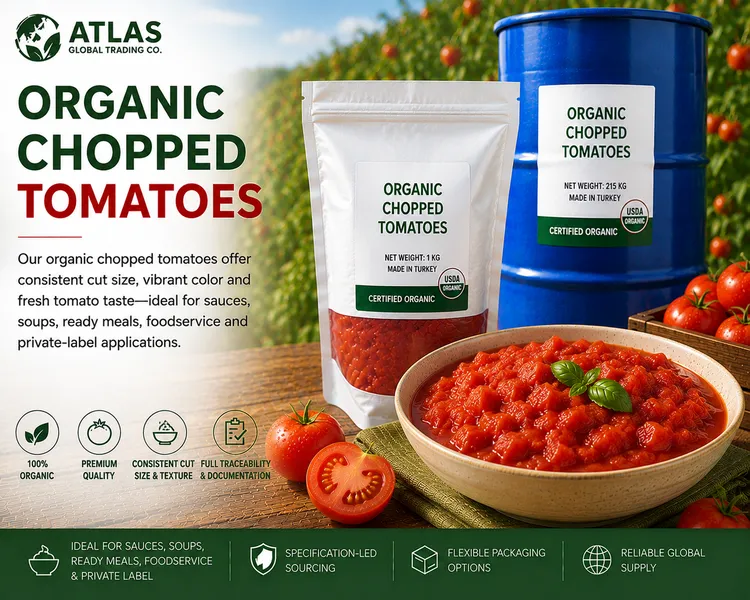
Organic chopped tomatoes are preserved tomato pieces designed for food manufacturing programs where visible tomato texture and recognizable pieces are important to the finished product. They can provide tomato flavor, color and particulate structure in sauces, soups, prepared meals, culinary bases and private-label products.
Atlas Global Trading Co. sources tomato ingredients through a multi-origin network of farms, processors and supply partners. We work with buyers to match the product to required cut size, piece integrity, packing medium, processing conditions, commercial pack format, certification requirements and delivery destination.
Cut size and piece integrity
Cut size is one of the primary selection criteria for chopped tomato programs. Different processors may offer different nominal cuts or piece profiles, and the appropriate format depends on how visible the tomato should remain in the finished application.
Buyers may also evaluate piece uniformity and integrity after thermal processing, pumping, mixing and filling. A product intended for a chunky pasta sauce or ready meal may require a different texture profile from one used in soup, foodservice preparation or a blended culinary base.
Specification focus
Piece size, packing medium, organic documentation and thermal process vary by supply program. Technical review may also include drained solids, tomato-to-liquid ratio, color, flavor, texture, pH or acidity where applicable, microbiological parameters and packaging integrity.
For preserved tomato pieces, the physical character of the product is often as important as analytical values. Manufacturers should therefore evaluate both the written specification and the performance of the ingredient in their own formulation and production process.
Packing medium
Chopped tomatoes may be packed in tomato juice, tomato puree or another product-specific medium depending on the processor and program. The packing medium can influence overall solids, flavor, viscosity, color and the amount of free liquid introduced into the finished recipe.
Buyers should specify whether the formulation requires firmer, more distinct pieces or a softer, more integrated tomato texture. This helps determine which available cut and packing system is best aligned with the intended application.
Typical applications
- Soups and soup bases
- Pasta, pizza and cooking sauces
- Ready meals and prepared foods
- Foodservice sauces and culinary preparations
- Private-label canned or pouched products
- Vegetable dishes, fillings and meal components
Processing and formulation considerations
Chopped tomatoes may be exposed to pumping, agitation, cooking and retort or hot-fill conditions during manufacturing. These steps can affect piece definition and final texture, so processors should validate the selected ingredient under their own commercial operating conditions.
The amount of free liquid contributed by the packing medium should also be considered when calculating final solids and viscosity. In some formulations, manufacturers may combine chopped tomatoes with tomato paste or puree to balance visible pieces with body and tomato intensity.
Organic supply and documentation
Where organic supply is requested, we confirm the certification scope and supporting documentation for the selected origin, processor and supply lot. Buyers should communicate the required organic standard and destination market so that certification expectations can be reviewed before order placement.
Depending on the selected program, documentation may include the current technical specification, certificate of analysis, applicable organic certification records and relevant lot or shipment documents. Exact documentation availability is confirmed with each commercial offer.
Sourcing and commercial planning
Multi-origin sourcing can provide additional flexibility when customers are balancing technical requirements, crop availability, freight economics, lead time and continuity of supply. For recurring programs, volume forecasts and preferred shipment timing help us assess the most appropriate supply pathway.
A complete inquiry should include the desired cut or piece size, packing medium, texture expectations, pack format, annual or shipment volume, organic certification requirements and delivery destination.